
What Affects Floor Installation or Replacement Costs?
Understand floor installation or replacement costs and learn how to budget accurately for your single family home renovation.

By Author 21
Learn more about Floor Installation or Replacement for guides, costs, and what to expect.
Compare Floor Installation or Replacement Pros Near You

Enter your ZIP code to compare top-rated local professionals and request free quotes.
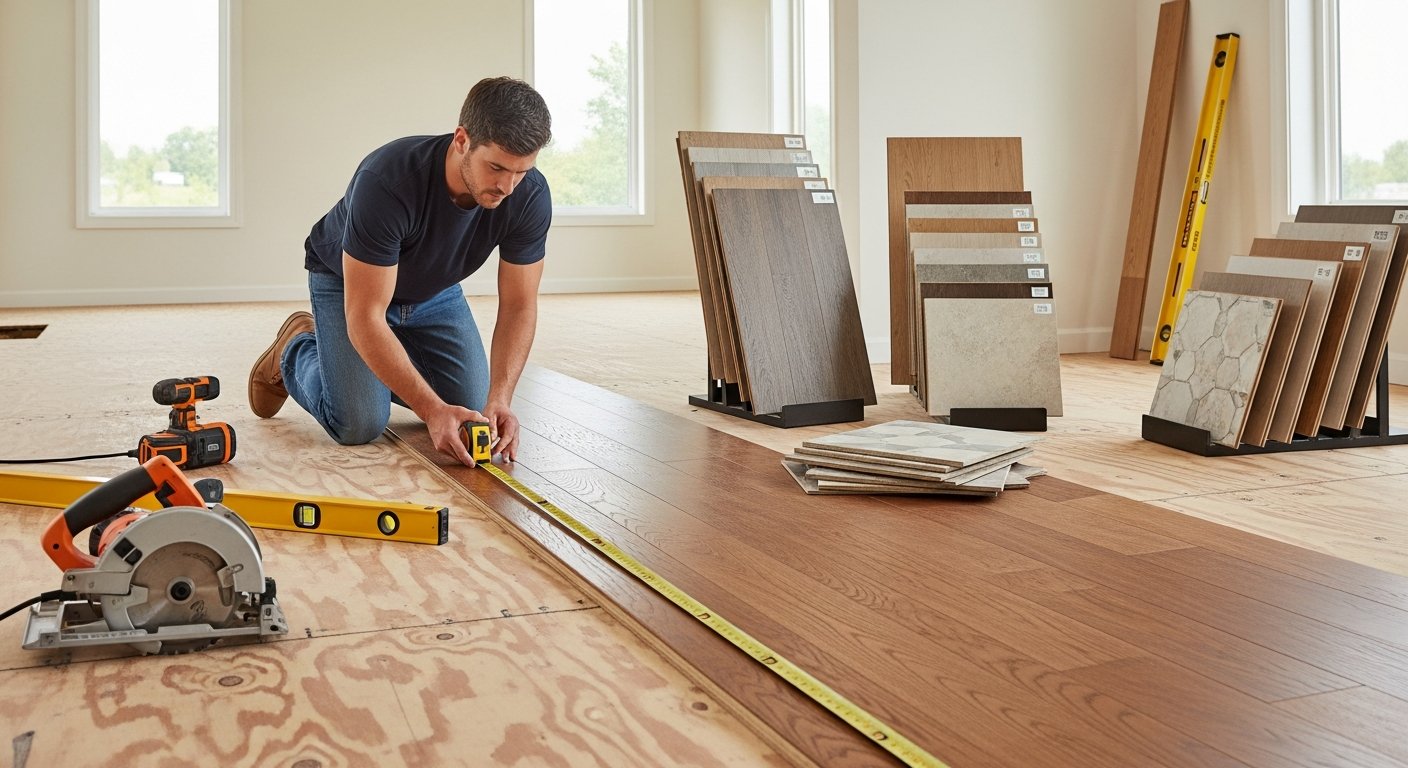
Flooring is one of the most impactful investments you can make in a home. It defines the look, feel, and comfort of every room. But the question that stops many homeowners is simple: how much will it really cost? The answer is rarely a single number, because floor installation or replacement costs depend on a wide range of variables. Understanding those variables is the first step toward a budget that works for your single family home. This article breaks down the key factors, typical price ranges, and smart strategies to help you plan with confidence.
Key Factors That Influence Flooring Costs
Before you start shopping for materials or calling contractors, it helps to know what drives the final price. The biggest cost categories are materials, labor, and preparation. Within each, there are specific details that can add hundreds or even thousands of dollars to your total. Here are the major factors that affect floor installation or replacement costs for a single family home:
Material type and quality: Solid hardwood is generally the most expensive, while laminate and vinyl tend to be more budget-friendly. Within each category, grade, thickness, and finish affect the price per square foot.
Labor rates in your area: Contractors charge different rates depending on local demand, cost of living, and the complexity of the job. Urban areas often have higher labor costs than rural regions.
Room size and layout: Larger rooms increase the total square footage and thus total cost. Irregular shapes, hallways, and closets add cutting time and waste.
Subfloor condition: If your existing subfloor is damaged, uneven, or needs moisture barriers, repair or leveling work will add to the bill.
Removal and disposal of old flooring: Tearing out carpet, tile, or old hardwood requires labor and disposal fees. Some contractors include this; others charge separately.
Accessibility and furniture moving: Jobs on upper floors, narrow staircases, or rooms filled with heavy furniture can increase labor time and cost.
Each of these factors interacts with the others. For example, a large living room with damaged subfloor and expensive material will cost significantly more than a small bedroom with new carpet and a flat subfloor. Getting a detailed quote that accounts for all these elements is essential for accurate budget planning.
Average Cost Breakdown by Material Type
Material choice is often the first decision homeowners make. It sets the baseline for floor installation or replacement costs. Below are common flooring types and their typical price ranges per square foot for materials alone, followed by labor estimates. Keep in mind that these are national averages; your actual costs may vary.
Hardwood. Solid hardwood is prized for its beauty and durability. Material costs range from $5 to $12 per square foot for domestic species like oak or maple, and up to $15 or more for exotic woods. Labor for installation adds $4 to $8 per square foot, with additional costs for sanding and finishing if you choose unfinished planks.
Engineered Wood. This is a more stable alternative to solid hardwood, often used in basements or over concrete slabs. Material runs $3 to $10 per square foot, and installation labor is similar to solid hardwood at $4 to $8 per square foot. The total is typically lower than solid wood but still a premium option.
Laminate. Laminate mimics wood or stone at a lower price point. Material cost is $1 to $5 per square foot, and labor for click-lock installation is $2 to $5 per square foot. It is one of the most affordable options for single family homes looking for a wood-like appearance without the high cost.
Vinyl (Luxury Vinyl Plank or Tile). LVP and LVT have become very popular because they are waterproof and durable. Material ranges from $2 to $7 per square foot, with labor of $2 to $5 per square foot. The click-lock versions are also DIY-friendly, which can save on labor costs.
Tile (Ceramic or Porcelain). Tile is ideal for bathrooms, kitchens, and entryways. Material cost is $1 to $10 per square foot, but labor is higher: $5 to $10 per square foot due to the need for cutting, grouting, and subfloor preparation.
Carpet. Carpet remains the lowest-cost option for many homeowners. Material runs $1 to $5 per square foot, with labor at $1 to $3 per square foot. However, carpet has a shorter lifespan and may need replacement sooner than other materials.
When you add up materials and labor, the total floor installation or replacement costs for an average-sized room (200 square feet) can range from under $500 for basic carpet to more than $4,000 for premium hardwood. For an entire single family home, the project can easily reach $10,000 or more.
Hidden Costs and Budgeting Pitfalls
Many homeowners focus on the price per square foot and forget about the extras. These hidden costs can derail a carefully planned budget. Being aware of them ahead of time allows you to build a more realistic estimate. Here are common expenses that often catch people off guard:
Subfloor repair or leveling: If your existing subfloor has water damage, rot, or uneven areas, you may need to replace plywood or use self-leveling compound. This can add $1 to $3 per square foot.
Underlayment: Most floating floors require an underlayment layer for moisture protection and sound reduction. Cost is typically $0.50 to $1 per square foot.
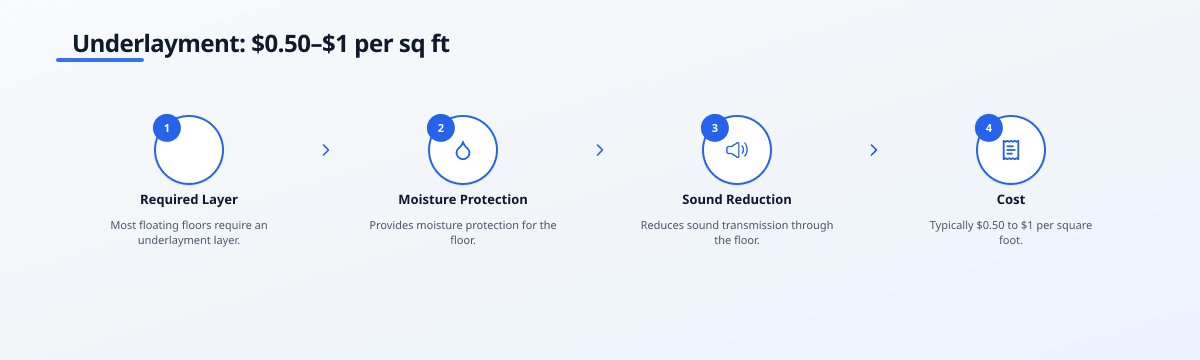
Underlayment is required for most floating floors to provide moisture protection and sound reduction. This infographic breaks down the steps and typical cost range of $0.50–$1 per square foot. Molding and transition strips: Baseboards, quarter round, and threshold pieces are needed to finish the edges. Material and installation can add a few hundred dollars.
Disposal fees: Removing old carpet, tile, or hardwood often involves dumping fees. Some contractors include this; if not, budget $50 to $150.
Furniture moving and storage: If you cannot move furniture yourself, contractors may charge extra. Temporary storage or moving services can also increase costs.
For a single family home with multiple rooms, these hidden costs can add up to 10-20% of the total project. Always ask your contractor for a written estimate that includes or excludes these items so you can compare quotes accurately.
Flooring for Single Family Homes: Special Considerations
Single family homes come with unique challenges and opportunities when it comes to flooring. Unlike apartments or condos, you have full control over the entire property. But you also have larger areas to cover, plus issues like moisture from crawl spaces or basements, and noise transfer between levels.
For main living areas and hallways, many homeowners choose a durable and timeless material like hardwood or luxury vinyl. These materials hold up well to foot traffic and can increase resale value. For bedrooms, carpet or laminate might be more comfortable and cost-effective. In basements, waterproof vinyl or engineered wood is recommended because of moisture risk.
Another consideration is the transition between rooms. If you use different flooring types in adjacent spaces (e.g., tile in the kitchen and hardwood in the dining room), you need smooth transitions that look intentional. This adds a bit to the installation cost but improves aesthetics.
Finally, the size of a single family home means floor installation or replacement costs can be substantial. However, it also gives you the opportunity to negotiate volume discounts with contractors. Some companies offer lower per-square-foot rates for larger projects. Getting multiple quotes from vetted professionals is the best way to find a fair price for your specific floor plan.
How to Get Accurate Floor Installation or Replacement Cost Estimates
To avoid surprises, you need a detailed estimate from a qualified contractor. Here is a step-by-step process to ensure you get a reliable quote for your single family home.
First, measure each room accurately or have the contractor measure for you. Write down the square footage and note any odd shapes or obstacles. Second, decide on the flooring material and grade you want. Third, ask each contractor to provide a written breakdown that includes materials, labor, removal of old flooring, subfloor work, underlayment, trim, and disposal. Fourth, compare at least three quotes to understand the market rate in your area.
180 Remodel can connect you with professional flooring contractors who provide quick, customized, and affordable quotes. By filling out a simple form, you can receive multiple estimates tailored to your project. This service saves time and helps you make an informed decision. The contractors listed on 180 Remodel are vetted and experienced in all types of flooring, from hardwood to vinyl to tile.
When reviewing quotes, look beyond the total price. A very low bid might indicate subpar materials or cutting corners. A very high bid might include unnecessary upgrades. Ask questions about the timeline, warranty, and what happens if unexpected issues arise (like finding asbestos under old tile). A good contractor will be transparent and happy to explain.
DIY vs Professional Installation: Cost and Quality Trade-offs
Some homeowners consider installing flooring themselves to save on labor costs. For certain materials like click-lock laminate or vinyl, DIY is feasible for a handy person. You can potentially save $2 to $5 per square foot in labor. However, there are downsides.
Professional installers bring experience, proper tools, and efficiency. They know how to handle subfloor imperfections, cut materials precisely, and achieve a clean finish. Mistakes made during DIY can lead to costly repairs or replacement down the road. Additionally, many flooring manufacturers require professional installation to honor the warranty. For expensive materials like hardwood or tile, hiring a pro is often the safer choice.
For single family homes with complex layouts or multiple rooms, professional installation also saves you time and physical effort. The total floor installation or replacement costs include not only the price but also the value of your time and the peace of mind that comes with a job done right.
If your budget is tight, you can mix approaches: hire professionals for the main living areas and tackle a small guest room yourself. Just be sure to check local building codes and manufacturer guidelines before starting.
Plan Ahead and Get Started Today
Understanding what goes into floor installation or replacement costs is the foundation of a successful renovation. From material choices to hidden fees to the benefits of professional installation, each factor plays a role in your final budget. By doing your research, asking the right questions, and comparing multiple quotes, you can avoid nasty surprises and create a beautiful floor that lasts for years.
For homeowners in the Dallas area and beyond, 180 Remodel offers a straightforward way to connect with trusted flooring contractors. Whether you are updating a single room or the entire house, you can get accurate estimates and expert advice. Start your floor installation or replacement project with confidence by visiting our flooring FAQ and requesting a free quote today.