
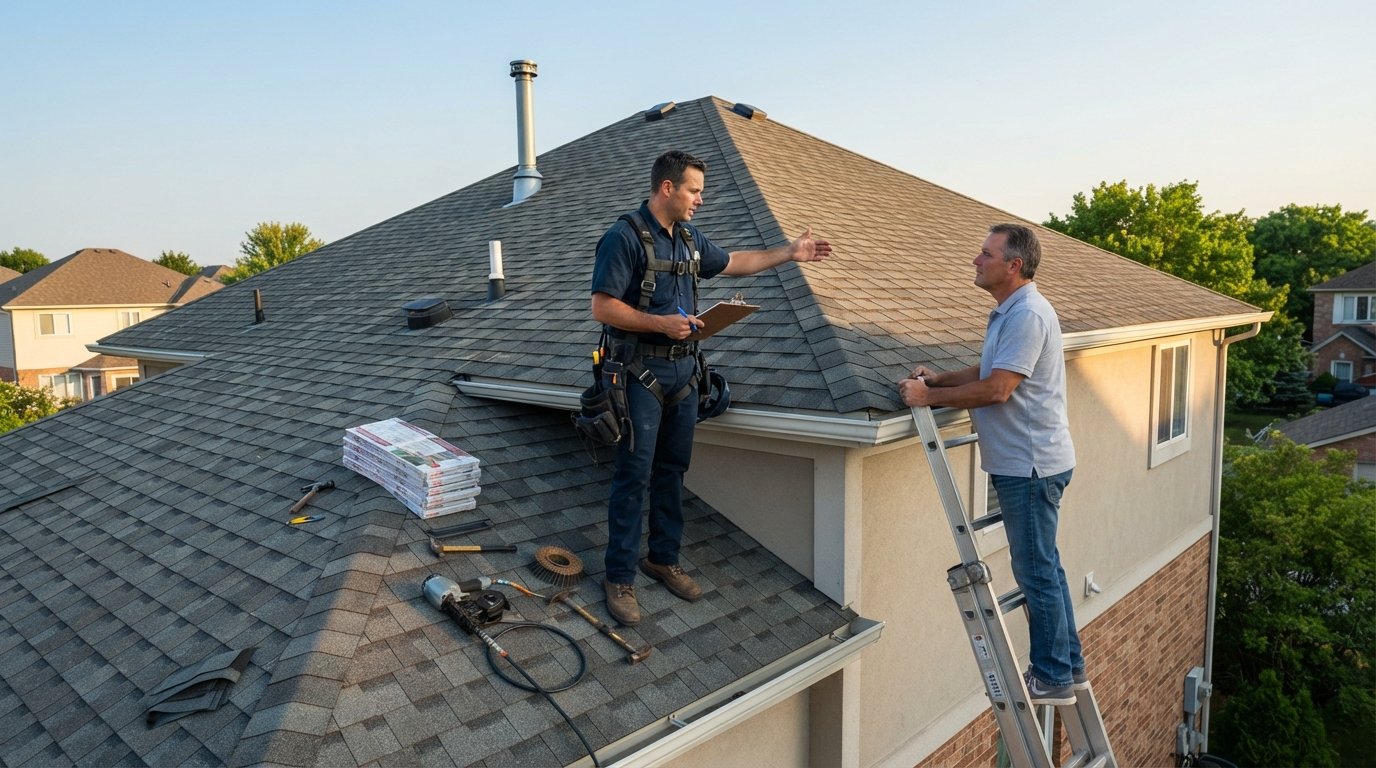
Questions to Ask Before Hiring a Roofing Contractor
Asking the right questions before hiring a roofing contractor can save you thousands and prevent surprise bills. Here is what to verify before you sign.

By Rachel Green
Learn more about Roof Installation or Replacement for guides, costs, and what to expect.
Compare Roof Installation or Replacement Pros Near You

Enter your ZIP code to compare top-rated local professionals and request free quotes.
A new roof is one of the most expensive investments a homeowner will ever make, often costing between $8,000 and $25,000 depending on materials, pitch, and square footage. Because that number is so large, and because the work happens high above your head where you cannot easily inspect it, the contractor you choose matters more than almost any other decision in the project. A skilled, insured, and communicative roofer protects your home, your warranty, and your wallet. A careless or dishonest one can leave you with leaks, voided coverage, and repair bills that dwarf the original quote. The best defense is preparation: knowing exactly what to ask before you sign anything. The questions to ask before hiring a roofing contractor are not just a formality. They are the filter that separates professionals from pretenders, and they give you the leverage to walk away from a bad deal before it costs you thousands.
Start With Credentials and Licensing
Before you discuss shingles, timelines, or price, confirm that the company is legally allowed to operate in your state and that it carries the insurance required to protect you if something goes wrong. Roofing is a high-risk trade, and an unlicensed crew working on your property is a liability nightmare. If a worker falls or damages your home, your homeowner's policy could be asked to cover the loss. Asking for paperwork upfront is not rude. It is standard due diligence, and reputable contractors expect it.
Request the following documents and verify each one independently rather than accepting a photocopy at face value:
- State or local license number: Look it up through your state's licensing board or your city's building department to confirm it is active and in good standing.
- General liability insurance certificate: Call the insurer listed on the certificate to confirm the policy is current and covers roofing work.
- Workers' compensation coverage: This protects you from medical bills if a crew member is injured on your property.
- Business registration and physical address: A post office box alone is a red flag, since it makes the company hard to track down if problems arise later.
Once you have the documents, ask a direct follow-up question: "Who will actually be on my roof?" Some companies sell the job and then subcontract it to whichever crew is available. That is not automatically bad, but you deserve to know. If subcontractors will perform the work, ask whether they carry their own insurance and whether the same licensing requirements apply to them. A contractor who hesitates, changes the subject, or promises to "send paperwork later" is telling you something important about how the rest of the project will go.
Evaluate Experience, Local Knowledge, and References
Experience matters, but not all experience is equal. A company that has installed hundreds of roofs in your climate and housing style will anticipate problems that a generalist might miss. In regions with heavy snow loads, high winds, or intense sun exposure, the details of underlayment, flashing, and ventilation change dramatically. Ask how many years the company has worked specifically in your area, and ask what roof types and materials make up the bulk of their portfolio.
References are only useful if you actually contact them. Request at least three recent references from jobs similar to yours, preferably completed within the last year. When you call, go beyond "were you happy?" and ask specific questions:
- Did the crew arrive when promised and finish on schedule?
- Was the final invoice close to the original estimate, or were there surprise charges?
- How did the company handle any problems that came up during or after the job?
- Would you hire them again for another project?
If you live in a market like Fort Worth, where hail and severe storms drive a large share of roofing work, local reputation carries extra weight. A contractor who understands storm damage documentation and insurance claims can save you enormous time and frustration. Our guide on finding the best roofing contractors in Fort Worth Texas walks through how to vet local providers and what questions matter most in that market.
Also ask whether the company belongs to any trade associations or manufacturer certification programs. Certain shingle manufacturers certify installers, and that certification often extends the material warranty. If a contractor claims to be certified, verify it directly with the manufacturer. A quick phone call or website check takes minutes and confirms whether the claim is real.
Understand the Estimate, Materials, and Warranty
The estimate is where many homeowners get blindsided. A low bid can hide inferior materials, skipped steps, or charges that appear only after the work begins. Ask for a written, itemized estimate that separates labor from materials and lists every component by brand and product line. If the quote simply says "architectural shingles" without naming a manufacturer or grade, you have no way to compare it against another bid.
Key items to confirm in writing include:
- Materials specification: Brand, product line, and color of shingles, underlayment, flashing, and ridge vent.
- Scope of work: Whether the estimate includes tear-off of the old roof, disposal fees, decking repair, and replacement of flashing and vents.
- Warranty terms: Distinguish between the manufacturer's material warranty and the contractor's workmanship warranty, and ask how long each lasts.
- Payment schedule: A reasonable deposit, progress payments tied to milestones, and a final payment due only after your inspection.
Warranties deserve special attention because they are easy to misunderstand. A 30-year shingle warranty typically covers defects in the material, not installation errors, and it may be prorated. The workmanship warranty is the one that protects you if the roof leaks because a nail was placed wrong or flashing was installed incorrectly. Ask how long the workmanship warranty runs, whether it is transferable if you sell the house, and what the claims process looks like. Get all of this in writing before work starts.
Be cautious about any contractor who demands full payment upfront or asks for cash only. A standard deposit covers materials and mobilization, but it should not exceed a reasonable fraction of the total. If a company pressures you to pay everything before the first shingle is laid, treat that as a serious warning sign.
Ask About the Process, Safety, and Cleanup
How a company runs the job tells you as much as what it promises. Ask for a written timeline that includes start date, estimated completion, and what happens if weather delays the work. Roofing is weather-dependent, so some slippage is normal, but you should know in advance how the contractor communicates changes and whether they will protect your landscaping and siding during the project.
Safety and cleanup questions often reveal the difference between a professional operation and a fly-by-night crew. A serious contractor will have clear answers about fall protection, dumpster placement, magnetic sweeps for nails, and daily debris removal. Ask specifically how they will protect your driveway, gutters, and plants, and who is responsible if something is damaged. You should also confirm who your point of contact will be and how quickly they respond to calls or texts during the project.
If you are comparing multiple providers and want a faster way to gather bids, platforms that match homeowners with vetted professionals can simplify the process. Services like USremodel connect homeowners with independent contractors across roofing, windows, and other renovation categories, which can help you collect several quotes without calling every company in town. Whether you use a matching service or hire directly, the same vetting questions apply, and you should never skip the verification steps just because a lead platform introduced the contractor.
Red Flags That Should End the Conversation
Certain behaviors should stop the process immediately, no matter how good the price sounds. A contractor who knocks on your door after a storm and claims to have "leftover materials" from a neighbor's job is almost always running a scam. So is anyone who offers to "handle your insurance claim" and asks you to sign a document that assigns your claim rights to them. That practice, sometimes called claim assignment, can leave you with little control over the settlement.
Other warning signs include:
- No physical business address or a refusal to provide license and insurance documents.
- Pressure to sign immediately or a "today only" discount that disappears if you hesitate.
- A demand for full payment upfront or payment in cash with no receipt.
- No written contract, or a contract with blank spaces and vague language.
- Promises that sound too good, such as a new roof covered entirely by insurance with no deductible.
Trust your instincts. If a contractor dodges questions, talks over you, or becomes defensive when you ask for paperwork, that is not a communication style problem. It is a preview of how they will handle problems once they have your money. Walking away from a bad contractor costs you nothing. Hiring one can cost you your roof, your warranty, and thousands of dollars in repairs.
Choosing a roofer is ultimately an exercise in patience and verification. The questions to ask before hiring a roofing contractor are your tools for turning a stressful, high-stakes purchase into a manageable, well-informed decision. Verify credentials, check references, demand written details, and never let urgency override your judgment. A few hours of careful questioning now can protect your home for decades to come.