
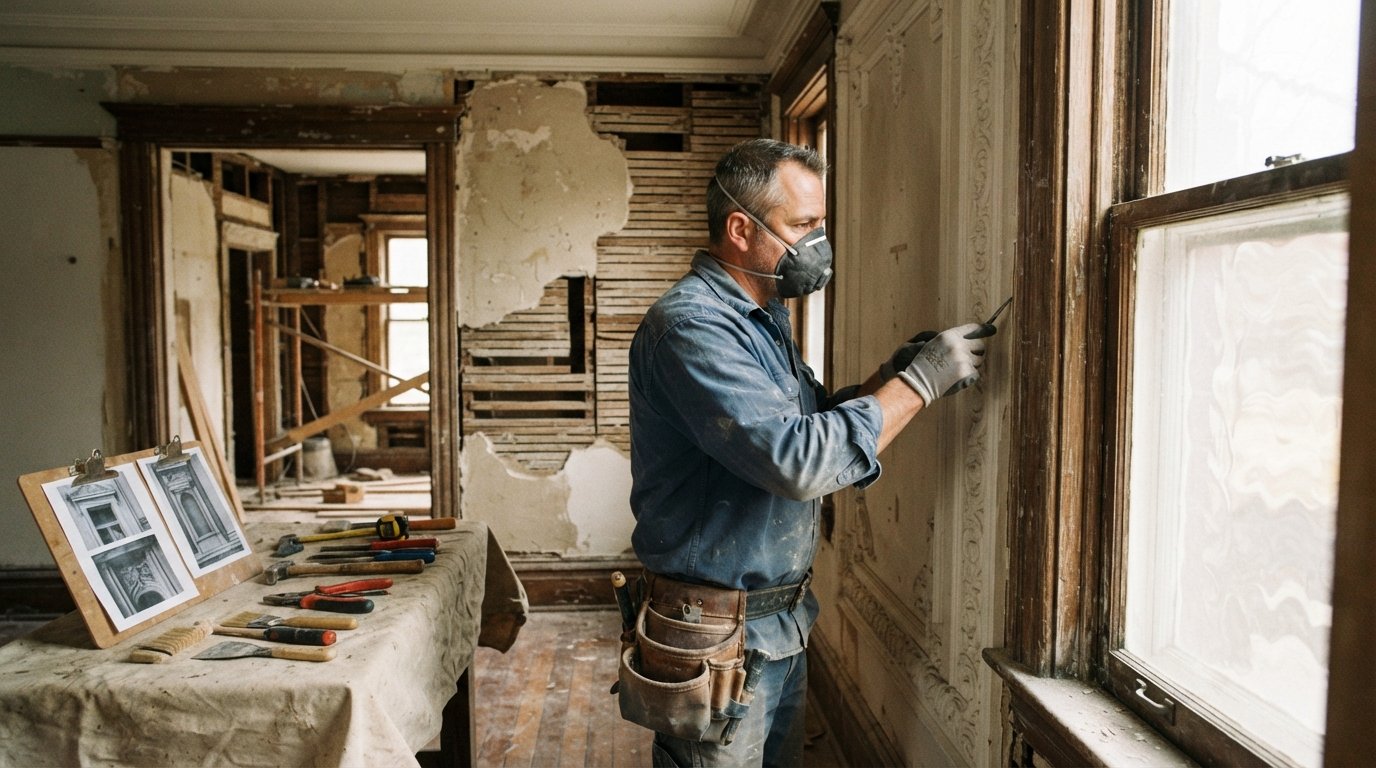
Historic Home Renovation Contractor Qualifications to Verify
Verify historic home renovation contractor qualifications before you hire. Learn the credentials and red flags that protect your old house.

By Margaret Lowe
Learn more about Home Remodeling for guides, costs, and what to expect.
Compare Home Remodeling Pros Near You

Enter your ZIP code to compare top-rated local professionals and request free quotes.
Restoring a historic home is one of the most rewarding projects a homeowner can take on, and it is also one of the riskiest if the wrong team is hired. Old houses hide surprises behind every wall: knob and tube wiring, lead paint, hand-hewn framing, and plaster that has been patched a dozen times. A general contractor who excels at building new subdivisions may still be the wrong choice for a 1920s bungalow or a Victorian with original millwork. Understanding the specific historic home renovation contractor qualifications you should look for is the difference between a restoration that honors the house and a renovation that quietly erodes its character and value.
Why Historic Homes Demand Specialized Contractors
Historic properties are not simply old houses. They were built with materials and methods that are rarely used today, and they often fall under preservation rules that restrict what you can change and how you can change it. A contractor who understands these constraints can navigate them efficiently, while an inexperienced one can create expensive delays, code violations, or irreversible damage.
Consider something as basic as plaster walls. A modern contractor may recommend tearing them out and installing drywall because it is faster and cheaper. A preservation-minded contractor knows that original plaster can often be repaired, that it contributes to the home's acoustic and thermal performance, and that removing it may violate local historic district guidelines. That single decision can affect your budget by tens of thousands of dollars and your home's historic integrity for decades.
Then there is the regulatory layer. If your home sits in a designated historic district or is individually listed on a local, state, or national register, exterior changes may require review by a preservation commission. Windows, roofing materials, paint colors, and even fence heights can be regulated. A contractor who has never worked through that approval process will slow your project down and may steer you toward changes that get rejected.
Specialized qualifications matter because they combine three skill sets: traditional building knowledge, modern code compliance, and preservation ethics. Few contractors hold all three, which is why vetting becomes so important.
Core Credentials and Training to Look For
When you begin interviewing contractors, ask directly about their credentials rather than assuming that a general license covers historic work. Many states license contractors broadly, with no historic specialization, so additional certifications and training are what separate a qualified preservation contractor from a standard remodeler.
Here are the credentials and training backgrounds that carry real weight in historic renovation:
- Preservation-specific certifications, such as those offered through preservation trade programs or the National Trust for Historic Preservation's network of craftspeople.
- Formal training in traditional trades, including timber framing, lime mortar, plastering, and historic window restoration.
- State or local contractor licensing appropriate to your jurisdiction, verified through the licensing board rather than the contractor's own marketing.
- Continuing education in building science as it applies to older structures, since moisture management in historic walls differs sharply from modern construction.
- Membership in preservation-focused trade organizations that require adherence to recognized rehabilitation standards.
Certifications alone do not guarantee quality, but they signal that a contractor has invested time in learning methods that are not taught in most modern construction programs. Ask to see documentation, and do not be shy about verifying it independently. A contractor who is genuinely qualified will welcome the scrutiny.
It also helps to ask which standards they follow. The Secretary of the Interior's Standards for Rehabilitation are the benchmark used by preservation commissions across the country. A contractor who can explain those standards in plain language, and describe how they applied them on past projects, is likely to be a strong fit.
Experience With Period-Specific Materials and Methods
Historic renovation is a materials game. The wrong mortar can destroy a century-old brick wall. The wrong paint can trap moisture inside wood siding. The wrong insulation can rot a plaster assembly from the inside out. You want a contractor who understands these interactions and can speak about them with specificity.
During interviews, ask how they handle common historic materials. A qualified contractor should be able to discuss lime mortar versus Portland cement, why historic brick needs to breathe, how to repair rather than replace original wood windows, and how to address knob and tube wiring without simply ripping out every wall. They should also know when to bring in a specialist, such as a structural engineer familiar with old framing or an abatement team certified for lead and asbestos.
One useful exercise is to ask for a walkthrough of a completed project. Have them point out what was original, what was repaired, and what was replaced. Pay attention to how they talk about the tradeoffs. A contractor who can explain why they chose to salvage a damaged staircase rather than replace it, and what that decision cost or saved, is demonstrating the kind of judgment you want on your own home.
If your project touches bathrooms or kitchens, which almost every historic renovation does, the complexity multiplies. Plumbing and electrical systems in old homes rarely meet modern code, and integrating new fixtures without damaging historic finishes requires careful planning. For a closer look at how specialists approach these spaces, our guide on finding bathroom renovation contractors near you walks through the vetting process step by step.
How to Verify Licenses, Insurance, and References
Verification is where many homeowners get lazy, and it is where problems start. A contractor's marketing materials can claim anything; the paperwork tells the truth. Build a simple verification checklist and work through it before you sign anything.
- Confirm the contractor's license number with your state or local licensing board, and check for complaints or disciplinary actions.
- Request a certificate of insurance directly from the insurer, not from the contractor, and confirm both general liability and workers compensation coverage are active.
- Ask for three to five references from historic projects completed in the last three years, and actually call them.
- Request lien waivers or a payment schedule that protects you from subcontractor claims.
- Verify any preservation certifications through the issuing organization.
When you call references, ask questions that go beyond satisfaction. Did the contractor stay on budget? How did they handle unexpected discoveries, which are almost guaranteed in historic work? Did they communicate clearly when the scope changed? Would you hire them again for a similar project? The answers to those questions reveal more than any portfolio photo.
It is also worth checking whether the contractor has worked with your local preservation commission before. A quick call to the commission office can tell you whether a contractor is known for smooth approvals or for repeated conflicts. That single inquiry can save you months of frustration.
Red Flags and Warning Signs to Avoid
Just as important as knowing what to look for is knowing what to walk away from. Historic renovation attracts both highly skilled craftspeople and opportunists who see old houses as quick profit. Learning to tell them apart protects your investment.
Be cautious if a contractor pushes for full gut renovation without exploring repair options, dismisses preservation guidelines as bureaucratic obstacles, or cannot explain how they will handle lead paint and asbestos. These attitudes often lead to unnecessary demolition, code problems, and lost historic character.
Other warning signs include:
- Requests for large upfront cash payments or payment in full before work begins.
- No physical business address or a history of operating under multiple names.
- Reluctance to provide written contracts, detailed scopes of work, or itemized estimates.
- Promises to handle permits "later" or suggestions that permits are not needed.
- Pressure to sign immediately or offers that expire within hours.
Any one of these should prompt a second look. A combination of them is a clear signal to move on. There are enough qualified contractors in most markets that you do not need to accept unnecessary risk.
Questions That Reveal True Qualification
The interview is your best opportunity to separate real expertise from confident salesmanship. Prepare a set of questions in advance and listen carefully to how the contractor answers, not just what they say.
Ask them to describe a project where they encountered an unexpected structural problem and how they resolved it. Ask how they source period-appropriate materials when originals cannot be salvaged. Ask what they would do if your preservation commission rejected a proposed change. Ask who will actually be on site each day and whether subcontractors are regularly used for critical trades.
A qualified contractor will answer these questions with specifics: names of suppliers, examples from past jobs, and a clear process. A less qualified one will answer with generalities and reassurances. The difference is usually obvious within a few minutes.
You can also ask about their process for documenting work. Photographs, daily logs, and written change orders are standard practice on well-run historic projects. If a contractor treats documentation as optional, expect disputes later.
Why Working With a Vetted Network Simplifies the Search
Finding a contractor with genuine historic qualifications takes time, and most homeowners do not have weeks to spend cold-calling and verifying credentials. That is where a vetted matching service can help. Platforms like USremodel connect homeowners with independent contractors across a wide range of specialties, including renovation and repair work, so you can compare quotes from professionals who have already been screened for licensing and insurance.
Using a network does not remove your responsibility to ask the right questions, but it does shorten the list of candidates and reduce the odds of hiring someone unqualified. You still want to verify historic-specific experience, review references, and confirm that the contractor has worked within preservation guidelines before. The difference is that you start with a smaller, more credible pool.
For homeowners in historic districts, this kind of pre-screening is especially valuable because the cost of a bad hire is so high. A contractor who damages original millwork or installs incompatible materials can leave you with repairs that cost more than the original project.
Matching Qualifications to Your Project Type
Not every historic renovation requires the same level of specialization. A kitchen refresh in a 1950s ranch home is a different undertaking than a full restoration of an 1890s Victorian. Match the contractor's qualifications to the scope and sensitivity of your project.
For minor updates that do not touch historic fabric, a skilled general contractor with some old-house experience may be sufficient. For projects involving exterior changes, structural work, or anything visible from the street in a historic district, prioritize contractors with documented preservation experience and a track record of approvals. For full restorations or projects involving significant original material, seek out craftspeople who specialize in traditional trades.
It also helps to think about the long term. Historic homes require ongoing care, and a contractor who does excellent work often becomes your go-to resource for future repairs. Building a relationship with a qualified preservation contractor is an investment that pays off for as long as you own the home.
Take the time to verify credentials, ask hard questions, and check references. The right contractor will make your historic renovation smoother, more predictable, and more faithful to the home you love.