
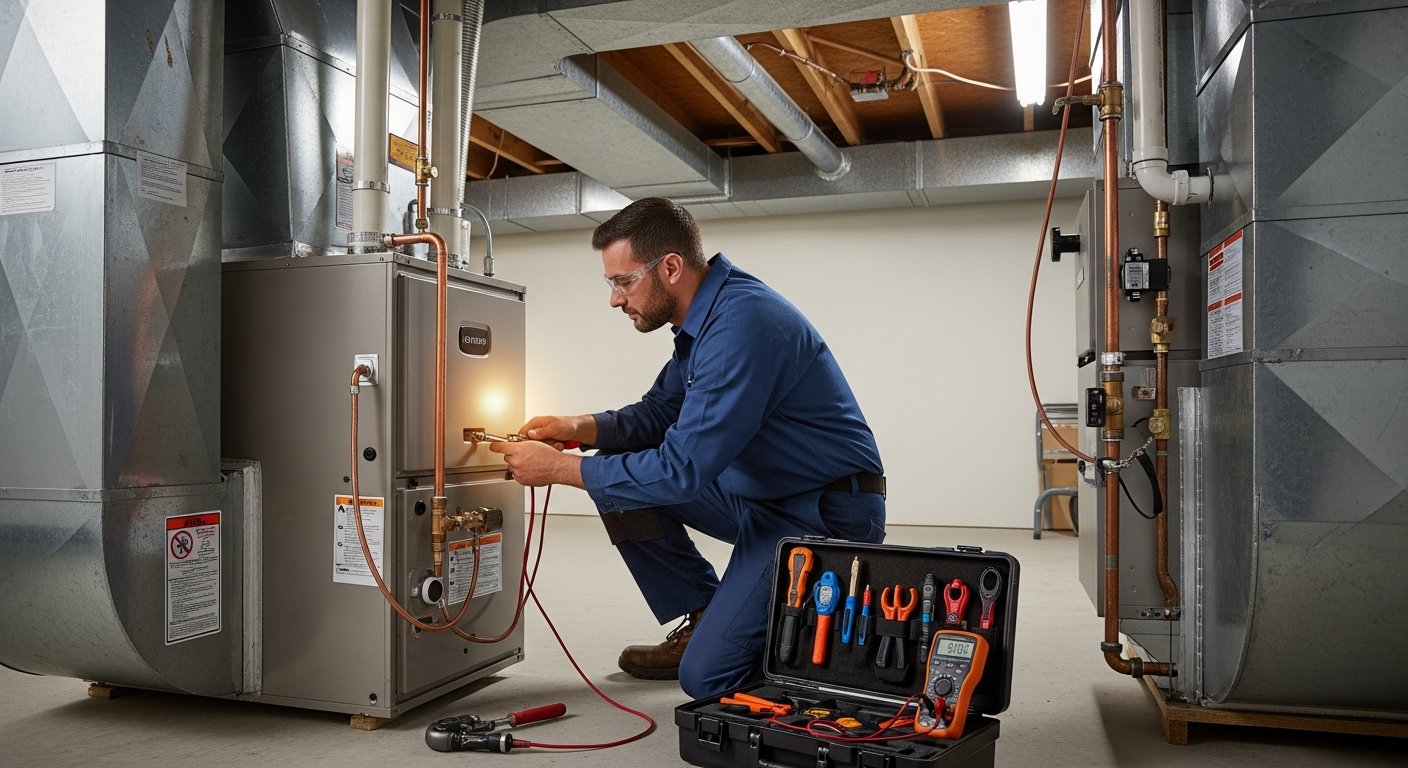
Heating Installation: A Homeowner's Complete Guide
A professional heating installation ensures reliable warmth and lower energy bills. Start with free quotes from 180 Remodel's trusted contractors.

By Author 21
Learn more about Heating System Installation or Replacement for guides, costs, and what to expect.
Compare Heating System Installation or Replacement Pros Near You

Enter your ZIP code to compare top-rated local professionals and request free quotes.
When winter temperatures drop, a reliable heating system becomes the most important appliance in your home. A well-executed heating installation does more than keep your family warm. It directly impacts your monthly energy bills, indoor air quality, and the long-term value of your property. Many homeowners delay replacing an aging furnace or heat pump until the system fails completely, leading to emergency service calls and rushed decisions. Understanding the full scope of a heating installation project helps you plan ahead, choose the right equipment, and work with a trusted contractor who delivers lasting results.
Why Professional Heating Installation Matters
A heating system is a complex assembly of combustion chambers, heat exchangers, ductwork, and electronic controls. Attempting a do-it-yourself installation can create safety hazards such as gas leaks, carbon monoxide poisoning, or electrical fires. Professional heating installation ensures that every component meets local building codes and manufacturer specifications. Certified technicians perform load calculations to determine the correct system size for your home. An oversized unit will short-cycle and waste energy, while an undersized unit will run constantly and struggle to maintain a comfortable temperature.
Beyond safety and sizing, professional installation affects your system's lifespan. A furnace that is installed with improper airflow or incorrect refrigerant charge may fail years before its expected retirement. Most manufacturers require proof of professional installation to honor the warranty. By hiring a qualified contractor through a platform like 180 Remodel, you protect your investment and gain peace of mind.
Signs That You Need a New Heating Installation
Knowing when to replace your heating system can save you from expensive repairs and sudden breakdowns. Here are clear indicators that it is time to consider a new heating installation.
- Age of the system: Most furnaces and boilers last 15 to 20 years. Heat pumps typically last 10 to 15 years. If your equipment is approaching or exceeding that range, replacement is often more cost-effective than repair.
- Rising energy bills: A noticeable increase in your heating costs without a corresponding change in thermostat settings means your system is losing efficiency.
- Frequent repairs: Spending more than 50 percent of the cost of a new system on repairs over two years signals that replacement is smarter.
- Uneven heating: Rooms that never get warm, or drastic temperature swings between floors, point to system layout or capacity problems.
- Strange noises or odors: Banging, rattling, or a persistent gas smell are safety red flags that warrant immediate professional assessment.
If you recognize any of these signs, act before the next cold snap. A planned heating installation gives you time to research options, compare quotes, and schedule the work at a convenient time. Emergency replacements often come with premium pricing and limited equipment availability.
Types of Heating Systems for Your Home
Choosing the right heating technology depends on your climate, existing ductwork, fuel source availability, and budget. Each option offers different benefits for performance and efficiency.
Furnaces
Furnaces are the most common heating systems in North America. They burn natural gas, propane, or oil to heat air, which is then distributed through ducts. Modern gas furnaces achieve efficiency ratings of 95 to 98 percent AFUE (Annual Fuel Utilization Efficiency). A high-efficiency condensing furnace captures exhaust heat that older models waste. Installation requires proper venting and a condensate drain line.
Heat Pumps
A heat pump transfers heat rather than generating it, making it extremely efficient in moderate climates. It can provide both heating and cooling from a single unit. Air-source heat pumps are popular for homes with existing ductwork, while ductless mini-split heat pumps work well for homes without ducts. New cold-climate heat pumps maintain performance even when outdoor temperatures fall below freezing. A professional heating installation of a heat pump requires careful sizing and refrigerant charge adjustments.
Boilers
Boilers heat water and distribute hot water or steam through radiators or radiant floor tubing. They provide even, draft-free heat and can be paired with tankless water heaters for domestic hot water. Boiler installation is more complex than furnace installation because of the piping and expansion tank requirements. However, boilers often last 25 to 30 years with proper maintenance.
Ductless Mini-Splits
For homes without ductwork or for additions like sunrooms and basements, ductless mini-splits offer a flexible solution. Each indoor unit controls its own zone, allowing personalized comfort. Installation involves mounting the indoor head, running refrigerant lines through a small wall opening, and placing the outdoor compressor. These systems are highly efficient and qualify for many energy rebates.
Your ideal system depends on a professional load calculation and a discussion with a qualified contractor. 180 Remodel can connect you with HVAC experts who will evaluate your home and recommend the best fit.
The Heating Installation Process: Step by Step
Understanding what happens during a heating installation helps you prepare your home and ask the right questions. While each job varies, most installations follow a standard sequence.
- Home evaluation and load calculation: The contractor measures your home's square footage, insulation levels, window efficiency, and ductwork condition. They use this data to calculate the correct system capacity (measured in BTUs).
- Equipment selection and ordering: Based on the load calculation, the contractor recommends specific models that match your budget and efficiency goals. They order the unit and any necessary accessories such as thermostats, filters, and venting materials.
- Permitting and preparation: Many municipalities require a permit for heating installation. The contractor pulls the permit and schedules inspections. They also protect your floors and furniture before starting work.
- Removal of old equipment: The existing system is disconnected, drained of refrigerant or fuel, and removed. Proper disposal of old units often includes recycling of metals and responsible handling of refrigerants.
- Installation of new system: The new furnace, heat pump, or boiler is placed in position. Ductwork may need modifications to match the new unit. Refrigerant lines are flushed and recharged, gas lines are pressure-tested, and electrical connections are made.
- System startup and testing: The technician turns on the system, checks for proper airflow, gas pressure, and temperature rise. They verify that thermostats communicate correctly and that safety controls function.
- Final inspection and walkthrough: A building inspector (if required) signs off on the work. The contractor explains how to operate the new system, change filters, and register the warranty. You receive documentation including manuals and maintenance schedules.
A typical heating installation takes one to three days, depending on the complexity. Boilers and geothermal systems may take longer. During the process, the contractor should keep you informed of progress and any unexpected issues.
How to Choose the Right Heating Installation Contractor
Selecting the best contractor is as important as selecting the right equipment. A poor installation can undermine the performance of even the most expensive furnace. Use these criteria to evaluate potential contractors.
- Licensing and insurance: Verify that the contractor holds a valid state or local license and carries general liability and workers' compensation insurance. This protects you in case of accidents or property damage.
- Experience with your system type: Ask how many installations they have performed specifically with the brand and model you are considering. Specialized experience reduces the risk of mistakes.
- Customer reviews and references: Read recent online reviews on multiple platforms. Request references from homeowners who had similar installations in the past year.
- Written estimates and warranties: Obtain at least three detailed quotes that specify equipment make and model, labor costs, and warranty terms. Manufacturer warranties typically cover parts for 10 years, but labor warranties vary.
180 Remodel simplifies this process by providing multiple quotes from vetted HVAC contractors in your area. You can compare credentials, pricing, and availability without spending hours on the phone. The platform's network of professionals has been screened for reliability and customer satisfaction.
Cost Considerations and Financing for Heating Installation
The price of a heating installation varies widely based on system type, efficiency rating, and the complexity of the installation. A standard gas furnace replacement averages between $2,500 and $6,000. Heat pump installations range from $3,500 to $8,000 for a standard model, and ductless mini-split systems cost $2,000 to $5,000 per zone. Boilers are on the higher end, often $5,000 to $10,000 or more.
Additional costs may include ductwork modifications, new thermostat wiring, chimney or venting upgrades, and electrical panel upgrades. Many utility companies and local governments offer rebates for high-efficiency equipment. Federal tax credits for Energy Star certified heat pumps and furnaces can offset up to 30 percent of the cost (subject to annual caps). Your contractor should help you identify all available incentives.
Financing options make heating installation more accessible. Some contractors offer in-house financing or partner with lending institutions for low-interest loans. 180 Remodel can connect you with contractors who offer flexible payment plans. Replacing an old, inefficient system often pays for itself in energy savings within a few years.
Preparing Your Home for a Heating Installation
A little advance preparation can make installation day smooth and efficient. Clear the area around your existing equipment so the technician has easy access. Move vehicles, furniture, and fragile items away from the work zone. If the installation affects your ductwork, cover vents in other rooms to prevent dust from spreading. Confirm with your contractor whether you need to turn off power or gas before they arrive.
Plan for temporary loss of heat during the installation. In cold climates, have space heaters or alternative arrangements ready. Most contractors schedule work during daylight hours and complete the installation in one day for standard furnace replacements. For complex systems like boilers, expect two days and prepare accordingly.
After the installation, ask the technician to walk you through the new system. Learn where the filter is located and how to replace it. Understand the thermostat programming and how to set schedules. Mark the maintenance schedule on your calendar: annual professional tune-ups and monthly filter changes will maximize your system's life and efficiency.
Investing in a professional heating installation is one of the most impactful upgrades you can make for your home's comfort and energy performance. By researching your options, working with qualified contractors through 180 Remodel, and planning ahead, you ensure that your family stays warm and your utility bills stay manageable for years to come.
Learn more about Heating System Installation or Replacement for guides, costs, and what to expect.
Compare Heating System Installation or Replacement Pros Near You
Enter your ZIP code to compare top-rated local professionals and request free quotes.