
Hardwood Floor Refinishing: Cost, Steps, and Timing
Discover the full hardwood floor refinishing process, costs, and timeline. Learn how to choose a pro and protect your investment for years.

By Justin Parker
Learn more about Hardwood Floor Refinishing for guides, costs, and what to expect.
Compare Hardwood Floor Refinishing Pros Near You

Enter your ZIP code to compare top-rated local professionals and request free quotes.
Your hardwood floors take a beating. Every scuff from a dragged chair, every scratch from a pet's nails, and every dull patch from years of foot traffic slowly erases the warmth and elegance that made you choose wood in the first place. The good news is that you do not need to tear them out. Hardwood floor refinishing can restore that rich, glossy finish and make your entire home feel renewed. It is one of the most cost-effective ways to boost your home's interior appeal, and understanding the process before you start can save you time, money, and a lot of frustration.
Refinishing involves sanding down the top layer of the wood to remove surface damage and old finish, then applying new stain and protective coats. It is a messy, dusty, and time-sensitive job that most homeowners should leave to professionals, but knowing what happens behind the scenes helps you make smart decisions. In this guide, we walk you through the full process, the costs you can expect, how to tell if your floors actually need refinishing, and how to choose a contractor you can trust.
Signs Your Hardwood Floors Need Refinishing
Not every scratch or dull spot means you need a full refinishing job. Sometimes a simple deep cleaning or a coat of polish can bring back the shine. But if your floors show any of the following signs, it is time to consider a more serious intervention.
- Water stains or dark spots that do not wipe away
- Deep scratches or grooves that catch your fingernail
- Worn-through finish in high-traffic areas, leaving bare wood exposed
- Fading or discoloration from sunlight that makes the wood look patchy
- Cupping or warping at the edges of boards, which indicates moisture damage
If you see any of these issues, refinishing is likely the right solution. Catching problems early prevents them from worsening and saves you from having to replace entire planks later. When the finish is completely worn down, the wood itself becomes vulnerable to moisture and staining, which can lead to permanent damage that no amount of sanding can fix.
How Much Does Hardwood Floor Refinishing Cost?
Cost is often the first question homeowners ask, and for good reason. The national average for hardwood floor refinishing ranges from $1,100 to $2,400, with most homeowners paying around $1,700 for a typical 300-square-foot living area. However, the final price depends on several factors, including the size of your space, the condition of the wood, the type of finish you choose, and your location.
Here is a breakdown of the main cost drivers:
- Square footage: Most contractors charge between $3 and $5 per square foot for sanding and refinishing, but complex layouts or multiple rooms can push that higher.
- Wood type: Exotic hardwoods like Brazilian cherry or teak are harder to sand and may require specialized equipment, increasing labor costs.
- Finish type: Oil-based polyurethane is the most affordable, while water-based finishes cost more but dry faster and have less odor. Hardwax oils and specialty finishes are at the premium end.
- Repairs: If you have damaged boards, gaps, or loose planks, those repairs add to the total. Expect to pay $50 to $150 per board for replacement.
- Stripping and staining: If you change the color of the wood, the contractor must strip the old stain completely, which adds time and cost.
Getting multiple quotes is essential. Prices can vary by 50% or more between contractors for the same job, so it pays to shop around. When you request quotes, make sure each contractor is bidding on the exact same scope of work, including the number of coats, the type of finish, and whether they will move furniture or handle odor control.
The Refinishing Process Step by Step
Understanding the steps involved helps you prepare your home and know what to expect during the project. A typical refinishing job takes three to five days, depending on the size of the area and the finish you choose.
Step 1: Preparation and Furniture Removal
The contractor will move all furniture out of the room or cover it with protective plastic. They will also remove or cover baseboards, vents, and doorways to contain dust. You should clear the room as much as possible before they arrive, and remove any delicate items like artwork or electronics that could be damaged by dust.
Step 2: Sanding the Old Finish
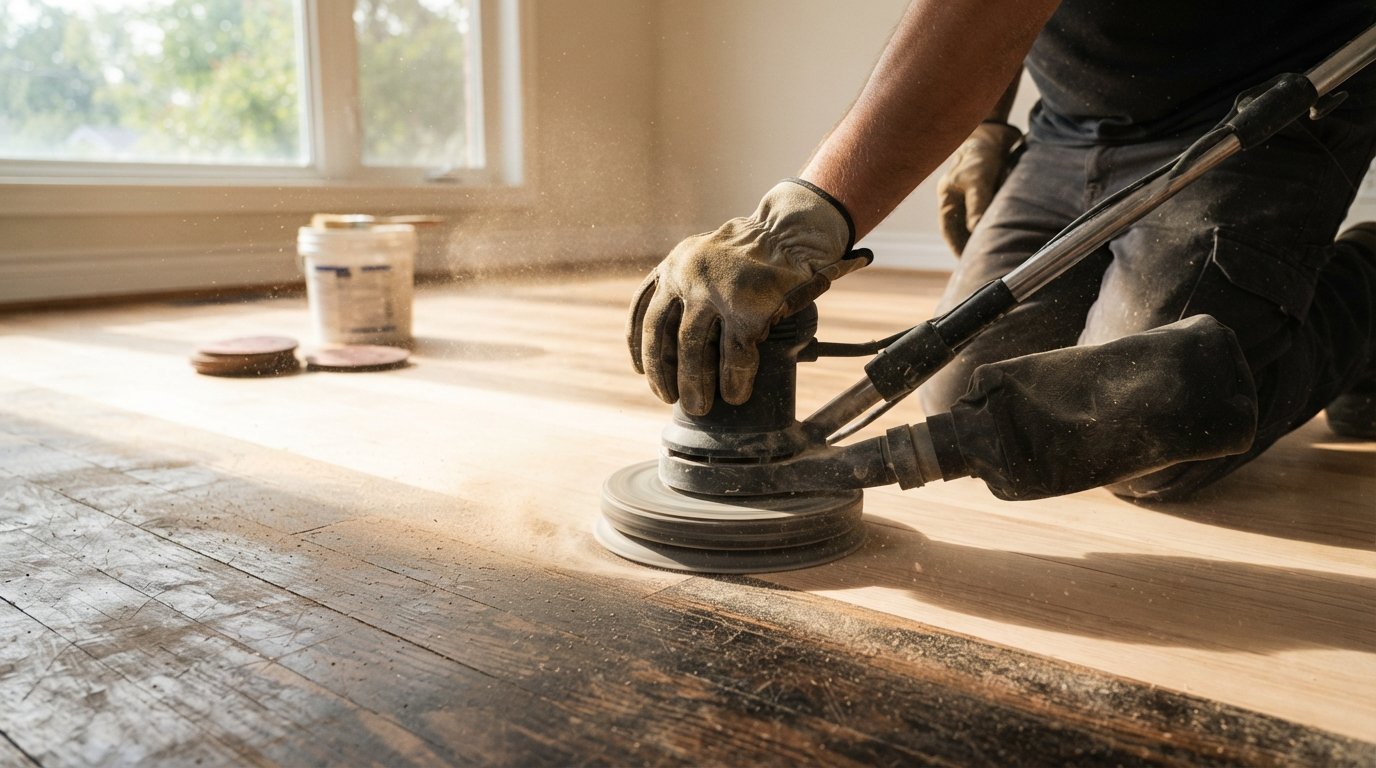
This is the most critical and messiest part. The contractor uses a drum sander for the main floor area and an edger for the corners and edges. They start with coarse-grit sandpaper to remove the old finish and smooth out scratches, then progressively move to finer grits to create a silky-smooth surface. This process can take a full day, and it generates a surprising amount of fine dust that can spread throughout your home despite dust containment systems.
Step 3: Staining (Optional)
If you want to change the color of your floors, the contractor applies wood stain at this stage. Stains come in a range of shades, from light natural tones to deep walnut or ebony. The stain is applied with a brush or cloth and allowed to penetrate before the excess is wiped away. This step requires patience because the color can be tricky to predict on different wood species, and it adds an extra day to the timeline.
Step 4: Applying the Finish
Once the stain is dry, the contractor applies the protective topcoat. Most professionals apply two to three coats of polyurethane, with a light sanding between coats to ensure adhesion. Oil-based polyurethane takes longer to dry, usually overnight between coats, while water-based polyurethane can be recoated in a few hours. The finish is what gives your floors that durable, glossy look, and it is the layer that takes the brunt of daily wear.
Step 5: Curing and Reassembly
The final coat needs time to cure. While the floor may feel dry to the touch in a day, it can take up to a week for the finish to fully harden. During this time, you should avoid heavy furniture, area rugs, and high heels. The contractor will reattach baseboards and vents once the finish is dry, then you can move furniture back.
Choosing Between Refinishing and Replacement
Refinishing is not always the right answer. If your floors have structural issues like extensive water damage, large gaps between boards, or rot, refinishing will not fix the underlying problem. In those cases, replacement is the better investment. But if the wood itself is in good shape and the issue is just surface wear, refinishing can extend the life of your floors by 10 to 20 years, at a fraction of the cost of replacement.
A good rule of thumb: if your floors have been refinished more than three times, they are getting thin. Each sanding removes about 1/16 inch of wood, and after three or four passes, the boards may become too thin to support another sanding. In that case, replacement is the safer choice. Your contractor can measure the remaining thickness of your boards and advise you on whether refinishing is still viable.
DIY vs. Hiring a Professional
The DIY route for hardwood floor refinishing is tempting because it saves on labor costs, but the risks are significant. Drum sanders are heavy and powerful, and they can easily gouge the wood if you do not keep them moving. Uneven sanding creates dips and waves that are visible in the reflected light. Plus, the dust control and finish application require a steady hand and experience to get a smooth, bubble-free result.
Professional contractors bring specialized equipment, including dust containment systems that minimize mess, and they have the experience to handle tricky corners, transitions, and wood species. They also know how to match stain colors and apply finishes evenly. Considering that a botched DIY job may require hiring a professional to fix it anyway, many homeowners find that going straight to a pro is the smarter choice. If you do decide to DIY, be prepared for a steep learning curve and a lot of physical labor, and always test your technique on a hidden area first.
How to Find a Reliable Contractor
Choosing the right contractor is just as important as the process itself. A bad refinishing job can ruin your floors permanently, so take your time vetting candidates. Start by asking for recommendations from neighbors, friends, or your local hardware store. Then, check online reviews and verify that each candidate is licensed and insured in your state.
When you narrow down your list, request written quotes from at least three contractors. Ask each one about their sanding equipment (drum vs. orbital, dust containment), the number of coats they apply, and whether they use oil-based or water-based finishes. A reputable contractor will be happy to answer your questions and may even show you examples of past work. Be wary of quotes that are significantly lower than the others; they may be cutting corners on materials or labor.
For a hassle-free experience, consider using a service like 180 Remodel, which connects you with vetted flooring professionals in your area. They handle the legwork of finding and comparing contractors, so you can focus on choosing the right finish for your home. Their network includes pre-screened pros who are committed to quality workmanship and transparent pricing.
Maintenance Tips to Extend Your Refinished Floors
Once your floors are refinished, protecting your investment is key. Proper maintenance can keep them looking beautiful for years and delay the next refinishing cycle. Here are some simple habits to adopt:
- Place doormats at all entrances to trap dirt and grit before it reaches the wood.
- Use felt pads under furniture legs and avoid walking on the floors with high heels or cleats.
- Sweep or vacuum regularly to remove abrasive particles, and use a microfiber mop with a hardwood-specific cleaner for deeper cleaning.
- Wipe up spills immediately, especially liquids like water, wine, or pet accidents, to prevent stains and warping.
- Keep the indoor humidity between 35% and 55% to prevent the wood from expanding or contracting.
Even with the best care, you will eventually need to refinish again, but good habits can stretch that timeline from 7 years to 15 or more. Regular maintenance also keeps your floors looking their best, which is important if you plan to sell your home. In fact, well-maintained hardwood floors are a major selling point for buyers, often increasing the perceived value of a property.
Frequently Asked Questions About Hardwood Floor Refinishing
How often should I refinish my hardwood floors? Most homes need refinishing every 7 to 10 years, depending on foot traffic and how well the floors are maintained. High-traffic entryways and kitchens may need it sooner.
Can I refinish only one room? Yes, but you may notice a color difference if the rest of your floors have aged or been exposed to sunlight. To ensure a perfect match, consider refinishing the entire floor area or have the contractor blend the stain carefully.
Is it safe for my family and pets? The sanding process creates dust, so it is best for family members to stay out of the work area. Water-based finishes have low VOCs and are safe once cured, while oil-based finishes emit stronger odors and require more ventilation.
Will refinishing make my floors look brand new? In most cases, yes. Refinishing removes surface scratches, stains, and dullness, revealing the natural beauty of the wood. However, deep gouges or water damage may require wood filler or board replacement to achieve a flawless look.
Make Your Floors Shine Again
Hardwood floor refinishing is a smart investment that pays off in both aesthetics and home value. Whether you are preparing to sell or simply want to enjoy your space again, the process is straightforward when you work with the right professionals. Take the time to assess your floors, gather quotes, and ask the right questions. Then, step back and admire the transformation.
If you are ready to move forward, our guide on hardwood flooring costs and care offers additional insight into maintaining your investment. For a free, no-obligation quote from trusted flooring contractors in your area, visit 180 Remodel today and take the first step toward beautiful, long-lasting floors.
Learn more about Hardwood Floor Refinishing for guides, costs, and what to expect.
Compare Hardwood Floor Refinishing Pros Near You
Enter your ZIP code to compare top-rated local professionals and request free quotes.