
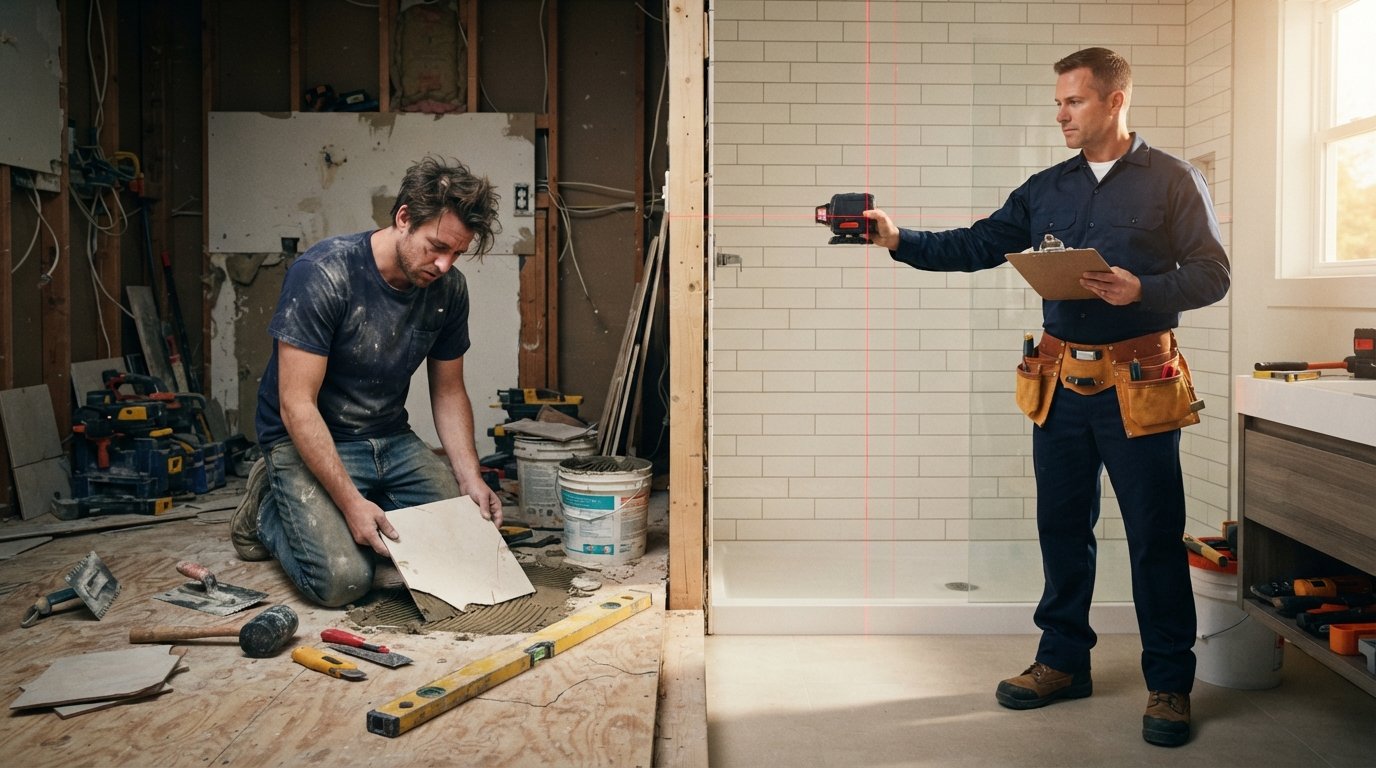
DIY vs Professional: When to Hire a Contractor for Renovation
Not sure if you should DIY or hire a contractor? Learn the key signs, hidden costs, and a simple framework to make the right call for your renovation.

By Jackson Adams
Learn more about Home Remodeling for guides, costs, and what to expect.
Compare Home Remodeling Pros Near You

Enter your ZIP code to compare top-rated local professionals and request free quotes.
You have watched the tutorial, priced the materials, and cleared your weekend. The idea of saving thousands on labor is tempting, and the sense of pride from doing it yourself is real. But the truth is, not every project belongs in your hands. Knowing the line between a smart DIY project and one that demands a licensed professional can save you money, time, and a lot of frustration. This guide breaks down the real costs, risks, and hidden factors behind the DIY vs professional when to hire a contractor for home renovation decision, so you can move forward with confidence.
Why the DIY vs Professional Decision Is Harder Than It Looks
Many homeowners assume the choice is simply about skill level. If you are handy, you DIY. If you are not, you hire. In reality, the decision involves permits, safety codes, structural integrity, and the long-term value of your home. A poor DIY job on a bathroom floor might look fine for a year, but it can lead to water damage, mold, and a costly repair later. A professional contractor, on the other hand, brings experience, insurance, and a warranty that protects your investment.
Consider the true cost of your time. A project that takes a pro three days might take you three weekends. That is time away from family, work, and rest. When you factor in your hourly rate, the "savings" of DIY often shrink. According to a 2025 survey by the National Association of Home Builders, homeowners who attempted complex renovations themselves spent an average of 30% more on materials and corrections than they would have if they had hired a contractor from the start.
When DIY Is the Right Call
There is a healthy middle ground. Some projects are perfect for a motivated homeowner. These tasks usually involve low risk, no structural changes, and no permits. They also give you a sense of accomplishment and a personal touch that a contractor cannot replicate.
Here are the projects where DIY makes sense:
- Painting walls, trim, and cabinets (as long as you prep properly)
- Installing backsplashes or tile accents in small areas
- Replacing light fixtures, outlets, or switches (if you are comfortable with basic electrical work)
- Simple landscaping, mulching, or planting
- Refinishing furniture or building simple shelving
These projects require basic tools, patience, and a willingness to learn. They also carry a low risk of catastrophic failure. If you make a mistake, the fix is usually cheap and quick. For example, a crooked backsplash tile can be removed and reset without damaging the wall behind it. That is the kind of mistake you can live with.
However, even in DIY-friendly projects, there are limits. If you are painting a two-story stairwell, the risk of falling is real. If you are replacing an outlet near a water source, you need to follow code. Always check local regulations before starting. Some municipalities require a licensed electrician for any work beyond swapping a fixture. When in doubt, consult a professional or your local building department.
Signs You Need a Professional Contractor
The moment a project touches the structure of your home, your safety, or your home's systems, it is time to call in a pro. Structural changes, electrical work, plumbing, roofing, and HVAC are not DIY territory. These systems are complex, interconnected, and regulated by building codes. A mistake can cause fires, floods, or even collapse your ceiling.
Here are the clearest signs that you should hire a contractor:
- The project requires a permit (most municipalities require permits for structural, electrical, plumbing, or major mechanical work)
- You are removing or moving walls, even non-load-bearing ones
- The work involves gas lines, water lines, or high-voltage electrical
- You are replacing a roof, windows, or siding
- The project is larger than 50 square feet of demolition or construction
- You are not comfortable with the risk of injury or property damage
Professional contractors bring more than just tools. They carry liability insurance, which protects you if something goes wrong. They also pull permits and schedule inspections, which ensures the work meets local codes. This is not just bureaucracy; it is a safety net. If you sell your home later, unpermitted work can cause delays or even void your insurance policy. According to a 2024 report from the National Association of Realtors, homes with unpermitted additions or renovations sell for 15% less on average and take twice as long to close.
The Hidden Costs of DIY Renovation
When you compare prices, DIY always looks cheaper. You see the cost of materials, and you imagine your own labor as free. But there are hidden costs that often surprise homeowners.
First, there are tool rentals or purchases. A tile saw, a nail gun, a wet saw, or a floor sander can cost hundreds of dollars. If you only use them once, that is money you will never get back. Second, there is the cost of mistakes. A wrong cut, a cracked tile, or a misaligned pipe can waste materials and time. Third, there is the cost of redoing the work. If your electrical work fails an inspection, you must pay a professional to fix it, and that costs more than if you had hired someone from the start.
Finally, there is the opportunity cost. The time you spend on a renovation is time you could spend working, with family, or resting. If you are on a salary, that time is not directly billable, but it still has value. A 2026 study by the Home Improvement Research Institute found that homeowners who DIY complex projects report an average of 12 hours of unexpected rework, which adds up to a full weekend lost.
How to Choose a Contractor When You Decide to Hire
If you have decided that your project is beyond your skill level, the next step is finding the right professional. This can feel overwhelming, but a structured approach makes it manageable. Start by asking for recommendations from friends, family, or neighbors who have done similar work. Then, check online reviews on sites like Angi, Google, or Yelp. But do not stop there. Always verify licenses and insurance. A licensed contractor has passed a background check and met local requirements. Insurance protects you if a worker gets hurt on your property.
When you meet with potential contractors, ask for a written estimate that includes materials, labor, timeline, and payment schedule. Get at least three quotes to compare. A significantly lower bid might mean lower-quality materials or a lack of insurance. A significantly higher bid might mean the contractor is busy or not interested in your project. The best choice is usually the middle range with transparent details.
One way to streamline this process is to use a platform that connects you with pre-screened contractors. For example, USremodel is a home improvement lead generation platform that matches homeowners with vetted professionals for projects like roofing, windows, bathroom remodeling, HVAC, flooring, and more. You submit your ZIP code and project details, and you receive quotes from multiple contractors, allowing you to compare prices and credentials without the legwork of cold-calling.
When you have a shortlist, check references. Call past clients and ask about the contractor's punctuality, communication, and whether they stayed on budget. Also, ask to see a portfolio of completed work. A professional should be happy to share before-and-after photos or even arrange a site visit to a recent project.
Weighing the Risks: Safety, Quality, and Liability
Safety is the most compelling reason to hire a professional. Roofing, electrical work, and structural changes are dangerous. According to the Consumer Product Safety Commission, over 40,000 DIY-related injuries are treated in emergency rooms each year. Many of these are falls from ladders, electrical shocks, or injuries from power tools. A professional has the training, equipment, and experience to mitigate these risks. They also carry workers' compensation, so you are not liable if they are injured on your property.
Quality is another factor. A professional contractor has done your type of project hundreds of times. They know the best materials, the right techniques, and the common pitfalls. They also stand behind their work with warranties. If something fails within a year, they return and fix it at no cost. A DIY job has no such guarantee. If your tile cracks, your paint peels, or your electrical outlet sparks, you are on your own.
Liability is the third consideration. If you do work without a permit and the city finds out, you could face fines, forced removal of the work, or even a lien on your home. If you sell, the buyer's inspector will flag unpermitted work, which can kill the deal. A professional contractor pulls permits and schedules inspections, which protects you legally and financially.
Making the Final Call: A Practical Decision Framework
So how do you decide? Use this simple framework. First, ask if the project requires a permit. If yes, hire a pro. Second, ask if the project affects the structure, plumbing, electrical, or HVAC. If yes, hire a pro. Third, ask if you have done a similar project successfully before. If not, hire a pro. Fourth, ask if you have the time, tools, and patience to do it right. If you are rushing or missing key tools, hire a pro.
If you answer no to all four questions, you might be a candidate for DIY. But even then, start small. Pick a project that is contained, like a single room or a single fixture. Do not start with a whole-house renovation. Test your skills, learn from mistakes, and build your confidence. There is no shame in hiring a pro for the parts you cannot handle. In fact, many homeowners hire a contractor for the structural or high-risk parts and do the finishing touches themselves. That hybrid approach lets you save money while ensuring safety and quality.
For example, you might hire a contractor to install a new bathroom vanity and plumbing, but you paint the walls and choose the fixtures yourself. Or you might hire a roofer to replace the roof, but you install the new gutter guards and downspout extensions. This way, you get the professional guarantee where it matters most, and you still get the satisfaction of contributing to the project.
Ultimately, the DIY vs professional when to hire a contractor for home renovation decision comes down to a simple equation: risk versus reward. The reward of DIY is savings and pride. The risk is injury, code violations, and costly mistakes. The reward of hiring a pro is safety, quality, and peace of mind. The risk is the cost. When the project is small, the risk is worth taking. When the project is large, the reward of hiring outweighs the cost. Trust your instincts, but also trust the data. As the old saying goes, "You can pay a professional now, or you can pay a professional later." The later option is always more expensive.
If you are still unsure, consider getting a free estimate from a professional before you commit. Many contractors offer free consultations, and that advice alone can help you decide. You might find that the project is simpler than you thought, or you might learn that it is far more complex. Either way, you will have the information you need to make the right call for your home, your budget, and your peace of mind.