
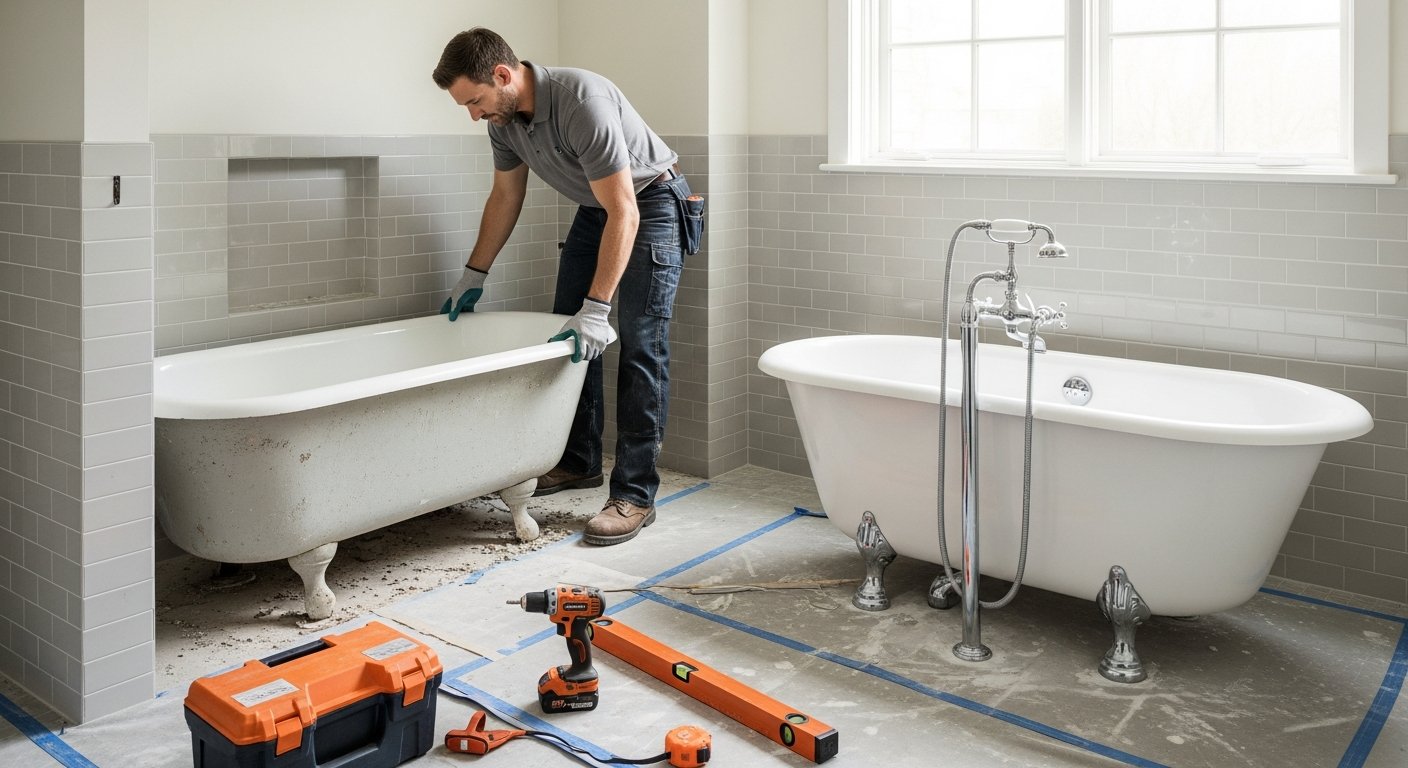
Bathtub Replacement: Cost, Process, and Smart Upgrades
Bathtub replacement can be simple and cost-effective. Learn about tub types, costs, and the step-by-step process to upgrade your bathroom.

By Justin Parker
Learn more about Shower and Bathtub Installation or Replacement for guides, costs, and what to expect.
Compare Shower and Bathtub Installation or Replacement Pros Near You

Enter your ZIP code to compare top-rated local professionals and request free quotes.
When a bathtub starts showing cracks, stains, or simply feels outdated, many homeowners assume a full remodel is their only option. But bathtub replacement is a project with more flexibility than most people realize. Whether you want to swap an old tub for a walk-in model, upgrade to a soaking tub, or change the entire layout of your bathroom, the right approach can save you thousands of dollars and weeks of disruption. This guide walks you through the real costs, the step-by-step process, and the decisions that matter most, so you can plan with confidence and avoid common pitfalls.
Why Consider a Bathtub Replacement?
There is no single reason that drives every bathtub replacement. Some homeowners are tired of scrubbing stubborn soap scum from a worn acrylic surface. Others need a safer bathing option for aging family members. And some simply want to refresh the look of their bathroom before selling their home. Whatever your motivation, understanding the benefits helps you make a decision that fits both your lifestyle and your budget.
One of the most compelling reasons to replace a bathtub is safety. Older tubs often have high sides that make stepping in and out difficult, especially for seniors or anyone with mobility issues. A walk-in tub or a tub with a lower threshold can dramatically reduce the risk of falls. Another reason is water efficiency. Modern tubs use less water than older models, which can lower your utility bills over time. Finally, a new tub can transform the entire aesthetic of your bathroom, creating a spa-like retreat that adds real value to your home.
If you are already planning a larger bathroom renovation, replacing the tub at the same time makes practical sense. It avoids the hassle of doing two separate projects and often reduces the overall cost because labor and materials are already in place. In fact, combining a tub replacement with other updates, such as new tile or a fresh coat of paint, is one of the most cost-effective ways to increase your home's resale value.
Types of Bathtubs: Which One Is Right for You?
Choosing the right tub is not just about looks. The material, size, and style affect everything from installation difficulty to long-term maintenance. Here is a breakdown of the most common types of tubs homeowners choose for a replacement project.
Acrylic and Fiberglass Tubs
Acrylic and fiberglass are the most popular choices for bathtub replacement because they are lightweight, affordable, and easy to install. Acrylic is more durable and resistant to scratches and fading, while fiberglass is cheaper but more prone to cracking. Both materials come in a wide range of shapes and sizes, including alcove, drop-in, and freestanding designs. They retain heat well, which means your bath stays warm longer, and they are relatively easy to clean with non-abrasive products.
Cast Iron and Steel Tubs
Cast iron tubs are the gold standard for durability. They resist chipping and scratching, and their enamel finish can last for decades. However, they are extremely heavy, often requiring extra floor support during installation. Steel tubs offer a lighter alternative with similar durability, but they tend to lose heat faster than acrylic or cast iron. If you prioritize longevity and are willing to handle the weight, a cast iron tub is an excellent investment.
Walk-In Tubs
Walk-in tubs are designed with safety in mind. They feature a low threshold, a watertight door, and built-in grab bars and seating. These tubs are ideal for elderly homeowners or those with physical limitations. The main drawback is the higher cost, which can be two to three times that of a standard tub. Installation may also require additional plumbing modifications to accommodate the door mechanism and the deeper basin.
Freestanding Tubs
Freestanding tubs, such as clawfoot or pedestal designs, make a bold statement. They are not attached to walls, giving you more flexibility in placement. However, they require more floor space and can be tricky to install because the plumbing must be routed through the floor. Freestanding tubs are a great choice for a master bathroom where you want a luxurious, hotel-like feel.
Bathtub Replacement Cost: What to Expect
Cost is often the first question homeowners ask, and for good reason. The total price of a bathtub replacement varies widely based on the type of tub, the complexity of the installation, and your geographic location. On average, you can expect to pay between $1,500 and $8,000 for a standard alcove tub replacement, including labor and materials. High-end freestanding tubs or walk-in models can push the total to $15,000 or more.
To get a clear picture, here are the main cost components you should plan for:
- Tub price: This ranges from $200 for a basic acrylic model to $5,000 or more for a designer freestanding tub. The material and brand significantly affect the price.
- Labor fees: Professional installation typically costs $500 to $1,500. This includes removing the old tub, preparing the site, and installing the new one. If plumbing or electrical work is needed, expect to pay more.
- Demolition and disposal: Removing an old cast iron tub is labor-intensive and may require special equipment. Disposal fees are usually $100 to $300.
- Surround and tile work: If you are also updating the tile surround or the walls around the tub, add $500 to $2,500 depending on the materials.
- Permits and inspections: Some municipalities require a permit for bathtub replacement, especially if you are moving plumbing. Permit fees are typically $50 to $200.
One way to keep costs down is to choose a tub that fits the existing alcove dimensions. A standard 60-inch alcove tub is the easiest to install because it does not require moving walls or plumbing. Custom sizes and unusual shapes increase both material and labor costs.
Given the range of prices, it is wise to get multiple quotes from licensed contractors. A detailed estimate should itemize the cost of the tub, labor, materials, and any additional work. Be wary of quotes that seem unusually low, as they may cut corners on waterproofing or structural support, which can lead to costly repairs down the line.
The Bathtub Replacement Process: Step by Step
Understanding the installation process helps you prepare your home and communicate effectively with your contractor. Here is what a typical bathtub replacement involves, from start to finish.
Step 1: Preparation and Demolition
The first step is to clear the bathroom of any personal items and remove the old tub. The contractor will shut off the water supply, disconnect the drain and overflow, and then cut or break the old tub into manageable pieces for removal. If the tub is cast iron, the crew may need to use a sledgehammer or a reciprocating saw, which creates noise and dust. This phase usually takes one to two days.
Step 2: Subfloor and Framing Inspection
Once the old tub is out, the contractor will inspect the subfloor and the wall framing for water damage or rot. This is a critical step because hidden issues, such as a leaking drain or termite damage, can compromise the new installation. If repairs are needed, they will be done before the new tub is set. This adds time and cost, but it is essential for a lasting result.
Step 3: Positioning and Leveling the New Tub
The new tub is then carried into the bathroom and positioned in the alcove. The contractor will use shims and a level to ensure the tub is perfectly horizontal, both front to back and side to side. Proper leveling prevents water from pooling and ensures the drain works correctly. The tub is then secured to the wall studs and the subfloor.
Step 4: Plumbing and Drain Connections
Next, the drain assembly and the overflow pipe are connected. The contractor will apply plumber's putty or silicone sealant to create a watertight seal. If you are moving the tub to a different location, this step also involves extending or rerouting the water supply lines and the drain pipe. This is the most technical part of the job and should be done by a licensed plumber.
Step 5: Wall Surround and Finishing
After the tub is set and plumbed, the contractor will install the wall surround, which can be tile, acrylic panels, or waterproof drywall. The edges are sealed with caulk to prevent water from seeping behind the walls. Finally, the contractor will install the faucet, showerhead, and any grab bars or accessories you have chosen.
Step 6: Cleanup and Final Inspection
The crew will remove all debris, vacuum the work area, and do a final walk-through with you. They will test the water flow, check for leaks, and make sure everything is in working order. If you pulled a permit, a local inspector will also need to sign off on the work.
The entire process usually takes two to five days, depending on the complexity of the project and whether any structural repairs are required. A simple alcove swap with no plumbing changes can be done in a weekend by an experienced DIYer, but professional installation is recommended for most homeowners.
DIY vs. Professional Bathtub Replacement
There is a certain appeal to tackling a home improvement project yourself, and bathtub replacement is no exception. However, this is not a beginner-friendly task. It involves heavy lifting, precise plumbing work, and a thorough understanding of waterproofing. A mistake can lead to leaks, mold, and structural damage that costs far more to fix than the price of hiring a professional.
If you have experience with plumbing and carpentry, and you are replacing a tub in the same location with no changes to the existing pipes, a DIY approach might save you $500 to $1,500 in labor. But if any of the following apply, it is best to call a licensed contractor:
- You are moving the tub to a new location, which requires rerouting drain lines and supply pipes.
- The old tub is cast iron and difficult to remove safely.
- You have any doubts about the condition of the subfloor or wall framing.
- You need a permit, and your local building department requires licensed work.
- You want a warranty on the installation, which most professional contractors provide.
Hiring a pro also gives you peace of mind. A reputable contractor will handle the demolition, haul away the old tub, and ensure the new one is installed to code. They can also advise on the best materials for your budget and lifestyle, and they will likely offer a workmanship warranty that protects you if something goes wrong.
When you are ready to get started, the smartest move is to compare quotes from several contractors. This not only helps you find a fair price but also gives you a sense of who you feel comfortable working with. A good contractor will be transparent about their process, provide a written contract, and answer all your questions without pressure.
For a deeper look at how to plan your entire bathroom update, including tile, fixtures, and layout, see our bathtub replacement guide for more details. And if you are considering a bigger transformation, our bathroom remodeling tips cover everything from design inspiration to budgeting for a full renovation.
Permits, Codes, and Safety Considerations
Before any work begins, check with your local building department to see if a permit is required for bathtub replacement. In many jurisdictions, a permit is necessary if you are altering the plumbing or electrical systems. Even if you are not required to pull a permit, it is wise to have the work inspected to ensure it meets safety standards. This is especially important if you plan to sell your home in the future, as unpermitted work can complicate the sale.
Building codes also dictate specific requirements for bathtub installation. For example, the drain must have a minimum slope, the tub must be properly supported, and the surrounding walls must be waterproofed. A licensed contractor will know these codes and follow them to the letter. If you are doing the work yourself, be sure to research the local codes and obtain the necessary permits before you start.
How to Choose the Right Contractor
Selecting a contractor is one of the most important decisions you will make for your bathtub replacement. The quality of the installation directly affects the longevity of your tub and the safety of your bathroom. Here are some tips for finding a reliable professional:
- Ask for referrals: Talk to friends, family, and neighbors who have recently had similar work done. Personal recommendations are often the most trustworthy.
- Check credentials: Verify that the contractor is licensed, insured, and bonded. This protects you in case of accidents or substandard work.
- Read reviews: Look at online reviews on platforms like Google, Yelp, and the Better Business Bureau. Pay attention to how the contractor handles complaints.
- Get detailed quotes: Ask at least three contractors for written estimates. Compare the scope of work, materials, and timelines, not just the total price.
- Ask about warranties: A reputable contractor will offer a warranty on both the materials and the installation. Make sure you understand what is covered and for how long.
Once you have chosen a contractor, make sure you have a written contract that outlines the project scope, the materials to be used, the start and completion dates, and the payment schedule. Avoid paying the full amount upfront; a deposit of 10 to 20 percent is standard, with the balance due upon completion and your final inspection.
Financing and Budgeting for Your Bathtub Replacement
Bathtub replacement is a significant expense, but there are several ways to finance it without straining your budget. Here are a few options to consider:
- Home equity loan or HELOC: These loans allow you to borrow against the equity in your home, often at lower interest rates than personal loans or credit cards.
- Personal savings: If you have the funds set aside, paying cash avoids interest charges and gives you more negotiating power with contractors.
- Credit cards: Some credit cards offer 0 percent intro APR periods, which can be useful for smaller projects. Just be sure to pay off the balance before the promotional period ends.
- Contractor financing: Many remodeling companies offer in-house financing plans. These can be convenient, but be sure to compare the interest rates and terms with other options.
When budgeting, factor in a contingency fund of 10 to 15 percent for unexpected issues, such as water damage or the need for new subflooring. This will give you a cushion and prevent stress if the project encounters complications.
Frequently Asked Questions About Bathtub Replacement
How long does a bathtub replacement take? A straightforward alcove replacement with no plumbing changes typically takes two to three days. More complex installations, such as a freestanding tub or moving the drain, can take four to five days.
Can I replace a bathtub without removing tile? Yes, it is possible if the tub is being replaced in the same location and the tile surround is in good condition. However, the new tub must have the same dimensions and shape. In most cases, some tile removal is necessary to ensure a watertight seal.
Is a bathtub replacement worth the cost? For most homeowners, yes. A new tub improves the look and functionality of the bathroom, increases home value, and can reduce water usage. If you plan to stay in your home for several years, the investment is usually worthwhile.
What is the most durable bathtub material? Cast iron is the most durable, followed by steel and acrylic. Cast iron can last for 50 years or more, but it is heavy and requires strong floor support.
Can I install a new tub over an old one? This is not recommended. Installing a new tub over an old one can trap moisture, leading to mold and structural damage. It also makes it difficult to access plumbing for repairs.
Final Thoughts: Making Your Bathroom Safer and More Beautiful
Bathtub replacement is a rewarding project that can dramatically improve your daily routine and the value of your home. By understanding the costs, the process, and the options available, you can make informed decisions that fit your budget and your needs. Whether you choose a budget-friendly acrylic tub or a luxurious freestanding model, the key is to plan carefully and work with a qualified professional.
Take the time to compare quotes, ask questions, and read the fine print. A well-executed bathtub replacement will give you years of comfort and enjoyment, and it is one of the smartest investments you can make in your home.
Learn more about Shower and Bathtub Installation or Replacement for guides, costs, and what to expect.
Compare Shower and Bathtub Installation or Replacement Pros Near You
Enter your ZIP code to compare top-rated local professionals and request free quotes.