
Aging in Place Remodeling: Safe Home Updates
Discover how aging in place remodeling can transform your home into a safe, comfortable haven that supports independence and peace of mind.

By Margaret Lowe
Learn more about Home Modification for Accessibility for guides, costs, and what to expect.
Compare Home Modification for Accessibility Pros Near You

Enter your ZIP code to compare top-rated local professionals and request free quotes.
When your home starts to feel less like a sanctuary and more like an obstacle course, it might be time to consider aging in place remodeling. The goal is simple: to create a living space that supports your independence, comfort, and safety as you grow older. Whether you are planning for your own future or adapting a home for an aging parent, the right renovations can make all the difference. You do not need to move to a care facility or a smaller apartment; instead, you can transform your existing home into a place that works with you, not against you. This approach not only preserves your lifestyle but also protects your financial investment in your property.
Many homeowners assume that aging in place remodeling means a complete overhaul, but that is rarely the case. The most effective projects are often subtle, thoughtful changes that address specific needs without sacrificing style or resale value. Think of it as proactive planning rather than reactive repair. By anticipating future challenges, you can avoid costly, urgent fixes later. Plus, the demand for accessible homes is growing, so these upgrades can actually boost your property's appeal to a wider range of buyers down the line. In this guide, we will walk through the essential areas of your home that benefit most from age-friendly updates, the financial considerations, and how to work with contractors to get the results you deserve.
Why Aging in Place Remodeling Matters More Than Ever
The concept of aging in place is not new, but it has gained significant traction in recent years. The U.S. Census Bureau projects that by 2030, one in five Americans will be of retirement age. This demographic shift means that more homeowners are thinking about how their homes can accommodate changing needs. The alternative, moving to assisted living or a nursing home, can be emotionally and financially draining. In contrast, a well-planned home modification allows you to stay in the neighborhood you love, near friends, family, and familiar routines. It is a choice that supports mental well-being as much as physical safety.
Moreover, the pandemic taught us that our homes need to be versatile. They are not just places to sleep; they are offices, gyms, and healthcare hubs. An aging in place remodel aligns perfectly with this trend, creating spaces that are flexible, comfortable, and safe for all stages of life. For instance, a bathroom with a walk-in shower and grab bars is not just for seniors; it is a luxury feature that anyone can appreciate. Similarly, a zero-step entry at the front door makes moving furniture, bringing in groceries, or pushing a stroller much easier. By investing in these upgrades, you are not just preparing for old age; you are enhancing your daily life right now.
Key Areas of Your Home That Need Age-Friendly Upgrades
When planning an aging in place remodel, it helps to think about the spaces you use most and where accidents are most likely to happen. The bathroom and the entryway are the two highest-risk areas, but the kitchen, bedroom, and even the laundry room deserve attention. A practical approach is to prioritize projects that improve accessibility, reduce the risk of falls, and make daily tasks easier. Below is a breakdown of the most impactful modifications, but remember that a professional contractor can help you customize this list to your specific home layout and your unique physical needs.
Bathroom Safety and Accessibility
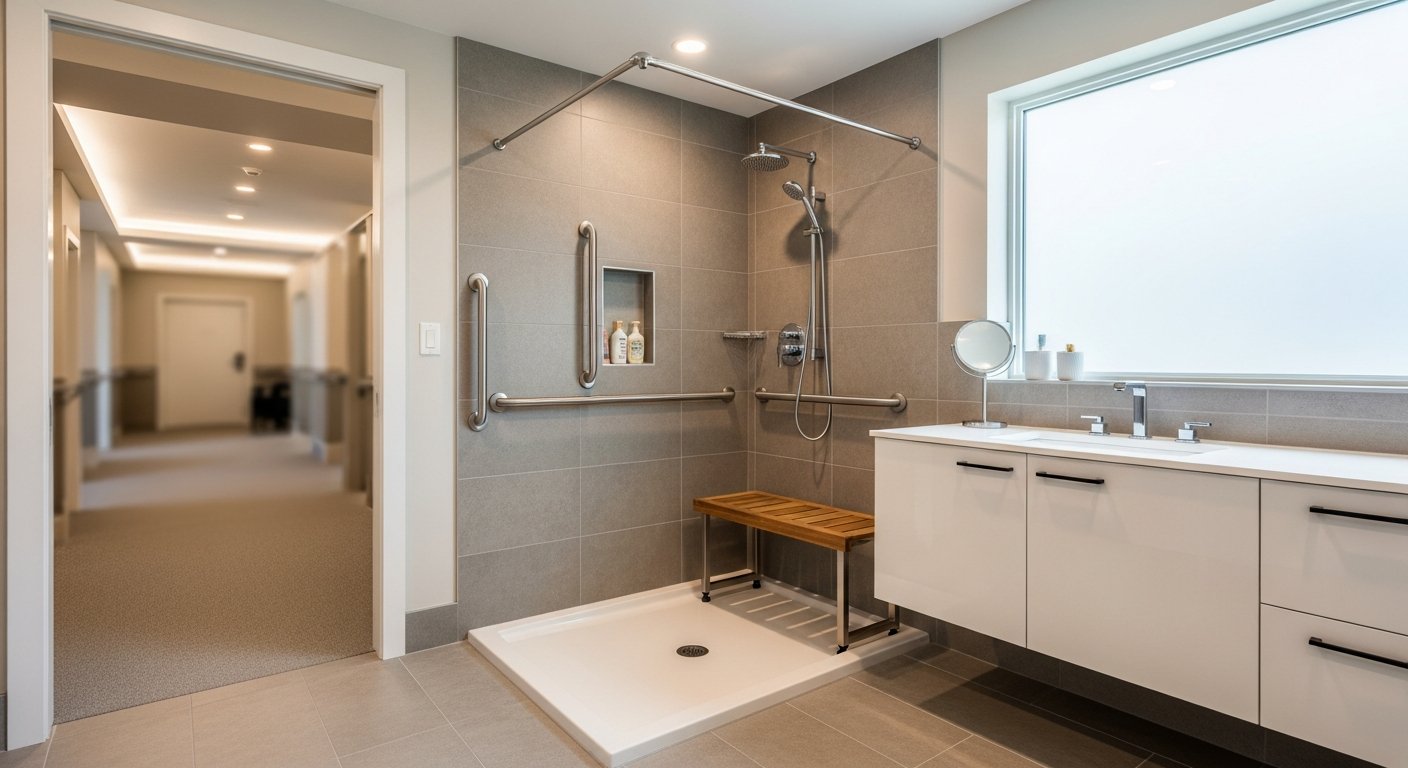
The bathroom is the most common site for home accidents, especially among older adults. Wet, slippery surfaces and the need to step over a high tub ledge create significant hazards. Therefore, this room should be your top priority. A curbless or low-threshold shower is a game changer. It allows you to walk straight in without stepping up, and it can easily accommodate a shower chair if needed. Adding grab bars in the shower and near the toilet provides crucial support, and they can be installed in a way that matches your existing decor. Another smart upgrade is a comfort-height toilet, which is slightly taller than standard models, making it much easier to sit down and stand up.
Beyond the essentials, consider the flooring. Replace slippery tile with textured, non-slip options like cork, rubber, or textured porcelain. These materials provide better traction underfoot, even when wet. Also, think about lighting. Bright, evenly distributed light reduces shadows and helps with visibility, especially for those with diminishing eyesight. Motion-sensor night lights in the bathroom and the hallway leading to it can prevent disorientation during late-night trips. If you have the space, a built-in bench in the shower offers a place to rest, and a handheld showerhead makes washing easier while sitting or standing. These changes are not just practical; they can be stylish, with modern fixtures and finishes that enhance the look of your bathroom.
Entryways and Exterior Access
Getting in and out of your home safely is fundamental to maintaining independence. Steps, even just one or two, can become a significant barrier. A zero-step entry, achieved by grading the walkway and adjusting the threshold, allows for smooth, level access. This is not only beneficial for those using wheelchairs or walkers but also for anyone carrying heavy items or recovering from a temporary injury. If you have a porch or landing, ensure it is large enough to maneuver a mobility device comfortably. The door itself should have a lever handle instead of a round knob, as levers are much easier to operate with arthritic hands or when your arms are full.
Outdoor lighting is equally important. Well-lit pathways, steps, and the front door area prevent trips and falls in the dark. Consider installing motion-activated lights that turn on automatically when someone approaches. Also, check that your doorways are wide enough, at least 32 inches, to accommodate a walker or wheelchair. If not, widening them during a remodel is a wise investment. Finally, think about the garage. If you have an attached garage, a step from the garage into the house can be eliminated with a ramped or level transition. These exterior changes not only improve safety but also add to the curb appeal and overall accessibility of your property.
Smart Technology and Universal Design Principles
Technology has become a powerful ally in aging in place remodeling. Smart home devices can automate tasks, provide emergency assistance, and make everyday living more comfortable. For example, voice-activated assistants can control lights, thermostats, and even locks, reducing the need to reach or bend. Video doorbells let you see who is at the door from any room, and smart speakers can be programmed to call for help in an emergency. These devices are relatively inexpensive and can be integrated into your remodel with minimal effort. They offer peace of mind for both the homeowner and their adult children.
Universal design is a philosophy that goes hand in hand with smart technology. It is the practice of designing spaces that are usable by all people, regardless of age, ability, or mobility. This goes beyond just adding grab bars; it influences the entire layout. For instance, in the kitchen, universal design means installing pull-out shelves, adjustable-height countertops, and side-by-side refrigerators that require less reach and strength. In the bedroom, it means placing light switches and thermostats at a height that is accessible from a seated position. By embracing universal design, you create a home that is not only safer for you but also more welcoming for guests of all abilities. To see how these concepts apply to other parts of your home, consider exploring our guide on prolonging your HVAC system lifespan, which shares tips on maintaining comfort and air quality as you age in place.
Budgeting and Financial Planning for Your Remodel
Cost is often the biggest concern for homeowners considering an aging in place remodel. It is true that these projects can range from a few thousand dollars for simple modifications to tens of thousands for a full home renovation. However, the investment is often less than the cost of moving or paying for long-term care. To manage this effectively, start by getting a professional assessment of your home and your needs. A contractor can provide a detailed quote that breaks down the costs for each area, helping you prioritize what is essential versus what is a nice-to-have.
There are several funding options available to help offset the expenses. Many homeowners use a home equity loan or line of credit, which offers favorable interest rates. Others might qualify for grants or loans from local, state, or federal programs, especially if the modifications are deemed medically necessary. The U.S. Department of Housing and Urban Development (HUD) offers Title 1 Property Improvement Loans, and some states have specific programs for seniors. Additionally, if you are a veteran, the VA offers grants for home modifications. Before you start, it is wise to consult with a financial advisor to explore all your options. And remember, a well-executed remodel can increase your home's resale value, making it a smart financial move in the long run.
Working with a Professional Contractor for Aging in Place Projects
Choosing the right contractor is perhaps the most critical step in the entire process. Aging in place remodeling is specialized work that requires knowledge of accessibility standards, building codes, and innovative design solutions. You want a contractor who listens to your concerns, offers practical suggestions, and has experience with similar projects. Look for certifications like the Certified Aging in Place Specialist (CAPS) designation, which indicates advanced training in this field. When you interview potential contractors, ask for references and examples of past work. A reputable contractor will be happy to share their portfolio and connect you with satisfied clients.
Once you select a contractor, communication is key. Clearly articulate your current needs and any anticipated future needs. Discuss your budget upfront and ask for a detailed written estimate that includes all materials, labor, and permits. A good contractor will also help you with the permitting process, which is especially important for structural changes like widening doorways or modifying entries. They should also be transparent about timelines and any potential challenges. If you are also dealing with other home issues, such as aging plumbing, it might be worth addressing those simultaneously. For example, our article on fixing frozen pipes offers insights that are relevant when you are already opening up walls for a remodel. By coordinating multiple projects, you can save money and reduce disruption to your daily life.
Conclusion: Your Home, Your Future
Planning for the future is a gift you give yourself and your loved ones. Aging in place remodeling is not about giving up; it is about taking control. It is about making a conscious choice to live safely and comfortably in the home you have built. With the right upgrades, you can continue to enjoy your independence, host family gatherings, and create memories in a space that truly reflects who you are. Whether you start with a single bathroom or undertake a full home renovation, every step you take toward accessibility is a step toward peace of mind.
Do not wait for an accident to force your hand. Begin the conversation today. Reach out to a qualified contractor, get a quote, and explore the possibilities. Your home has served you well for years; now it is time to return the favor. By investing in aging in place remodeling, you are not just modifying a house; you are securing a future of dignity, safety, and joy in the place you call home.